On the banks of the Parramatta River in western Sydney, a white metal structure encloses two volumes of a new museum. The Powerhouse Parramatta opened to the public on November 7, 2026, with five exhibitions and over three thousand objects, of which more than 1,600 belong to the institution's collection.
Designed by the Franco-Japanese firm Moreau Kusunoki, in collaboration with the Australian firm Genton and the engineering team at Arup, the building occupies approximately 30,000 square meters. The project introduces a state-run cultural facility dedicated to the intersection of art, science, technology, and design to the west side of the city.
An exoskeleton to free up internal spaces.
The exoskeleton comprises over 1,300 steel components, according to documentation from the Government of New South Wales. The pieces are arranged in W, X, N, and A configurations, with heights ranging from four to twenty meters. The exoskeleton was developed as an external structural system that allows for the freeing up of exhibition spaces from intermediate pillars. This organization is especially useful in a museum whose objects can range from small design pieces to large-scale equipment.
According to the architects' statement published by Powerhouse, the L-shaped configuration brings together two wings connected by a glazed atrium. Distributed across seven floors, the wings leave part of the land free for parks and terraces along the river. The complex includes seven large exhibition spaces and more than 18,000 square meters dedicated to exhibitions, learning, and public areas, according to the institutional report released on November 9, 2026. The architects relate the intervals between galleries to the Japanese concept of ma, in which the void gains meaning through its relationship with the spaces that delimit it.
Structural engineer Kengo Takamatsu from Arup worked with the architects to develop a three-scale metal framework with diagonals forming X, V, and N patterns. On October 31, 2022, the team evaluated a prototype approximately seven meters high, four meters wide, and five meters deep, designed to examine the connections between steel, concrete, and the facade.
A collection that brings design and technology closer together.
The opening program highlights the breadth of the Powerhouse collection. The museum presents objects associated with the history of technology, industry, creative practices, and cultural relationships with the territory. The diversity of the exhibitions required spaces capable of accommodating multimedia installations, documents, fragile objects, and structures of varying dimensions.
The Mall, developed in collaboration with OMA/AMO, analyzes the history of shopping malls. Among the materials announced are documents by the architect Victor Gruen and projects associated with the diffusion of commercial identification technologies. The exhibition treats the shopping center as an architectural typology and a social phenomenon, examining its trajectories, its relationship with consumption, and the technologies that underpin its operation.
Task Eternal explores humanity's desire to fly. The exhibition, conceived with OPEN Architecture, includes more than 850 objects related to aviation and space exploration. Among the announced highlights are drawings of flying machines by Leonardo da Vinci, a lunar sample, and a light installation by James Turrell.
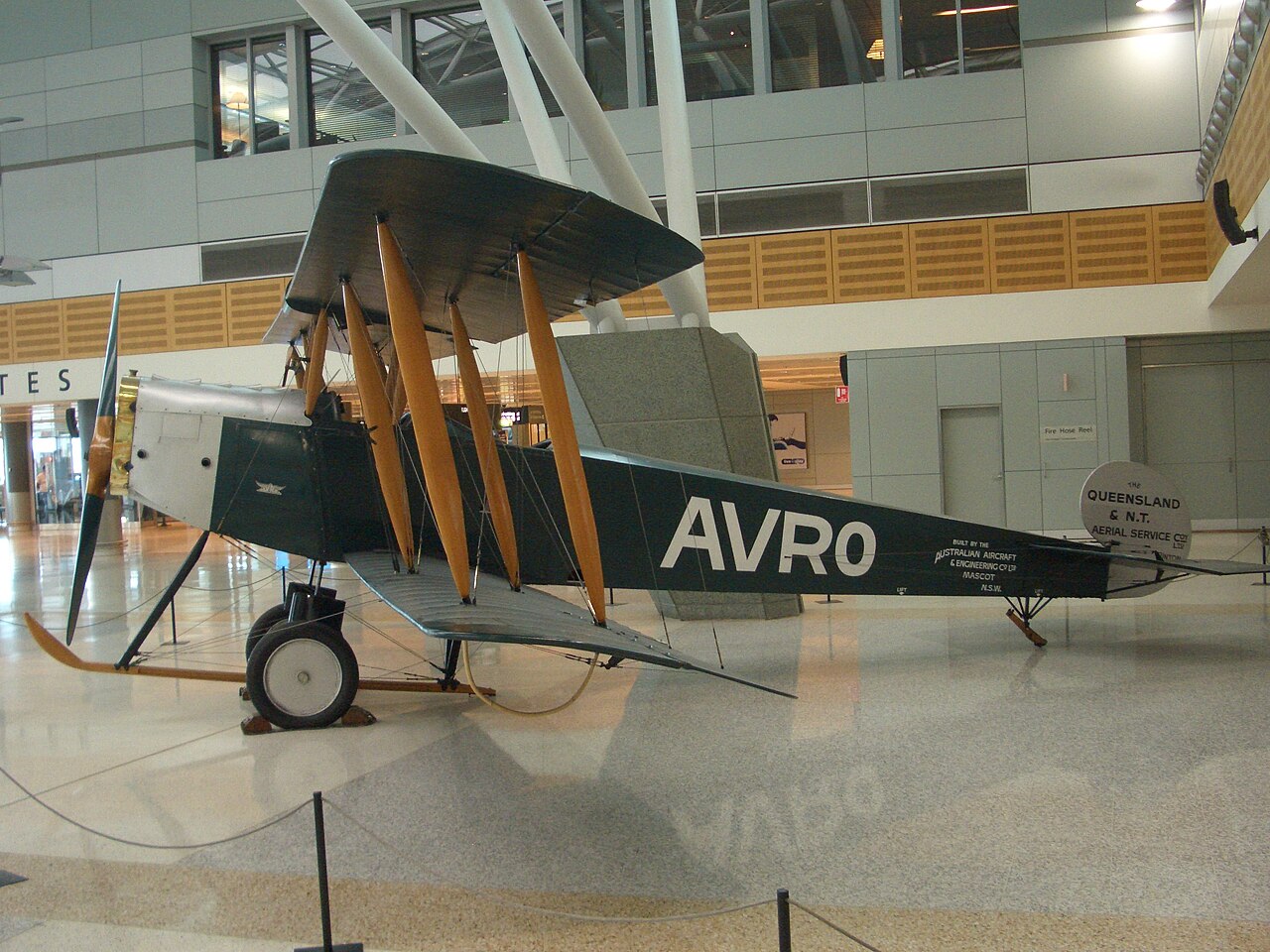
The first object installed in the new museum, in May 2026, was a replica of the Avro 504K, a model associated with the origins of Qantas. Built in Mascot in 1988 by engineers and apprentices of the company, the aircraft has a wingspan of 11 meters and weighs more than 760 kilograms. It is part of the exhibition alongside a Cierva C.30A autogyro and the Skycraft Scout Mark 1 ultralight, designed by Australian Ron Wheeler. The museum presents these aircraft in its largest exhibition space. The current Task Eternal program includes more than 850 objects and organizes the visit in four stages, from the aspiration for flight to the return to Earth.
Es Devlin, aquatic territories and the children's universe
Es Devlin: The Turning brings together five installations by the British artist, whose practice spans sculpture, film, architecture, and performance. The exhibition includes mirroring experiments and works related to memory and biodiversity.
The exhibition Overflow, led by First Nations, brings together stories from Aboriginal communities and organizations connected to the fresh and saltwater of New South Wales. Ivan Sen's cinematic work contributes to the presentation of conservation efforts and cultural ties to these territories.
" The Dark, " designed for children aged 4 to 12, features immersive environments and hundreds of objects. The exhibition brings together more than 800 objects, including minerals from the Australian Museum, animations commissioned from First Nations creators, and objects loaned by children from western Sydney. The program demonstrates that the organization of museum space also depends on the characteristics of the audience to whom each experience is directed.
The museum was built on traditional Dharug territory. According to Infrastructure NSW, the construction involved more than four thousand workers. About three-quarters of the workforce came from western Sydney, a region that also received contracts worth more than 329 million Australian dollars through local companies. The project, therefore, integrates the creation of a state cultural facility with the urban and economic transformation of Parramatta.
Australian design in everyday spaces.
In addition to the exhibitions, the building itself incorporates creations by Australian designers. In June 2026, Powerhouse announced orders from over 50 professionals and studios, encompassing furniture, lighting, interiors, landscaping, and elements for reception and social areas.
The budget of 915 million Australian dollars corresponds to the project which includes the museum, the new collection storage facility at Castle Hill, and preservation and digitization activities. The program includes the digitization and conservation of more than 371,000 objects from the collection.
Four of the five inaugural exhibitions were announced with free admission. Task Eternal offers free admission for adults, according to the official opening program. Admission for those under 16 is free for all five inaugural exhibitions.